
How to Read Ocean Conditions Before You Dive (And Why It Matters More Than You Think)
You've got your gear packed, your buddy confirmed, and a dive site picked. But before you hit the water — do you actually know what the ocean is doing today?
Reading ocean conditions is one of the most underrated skills in diving. It's not glamorous. There's no certification for it. But it's what separates experienced ocean-goers from people who end up in situations they weren't prepared for. And the good news? It's not complicated once you know what to look for.
Here's your go-to guide for reading the ocean before every dive.

Why Ocean Conditions Matter for Every Dive
Conditions don't just affect comfort — they affect safety. A site that's magical on a flat, clear day can be disorienting, exhausting, or downright dangerous when there's a strong current running or a swell pushing through. Even snorkelers and freedivers working in shallow water feel the difference.
The ocean is never the same twice. Tides shift, winds pick up, visibility changes with rain and runoff, and currents can reverse direction within hours. Getting in the habit of checking conditions before every session — not just on big travel dives — is one of the smartest things you can do.
Start With the Swell
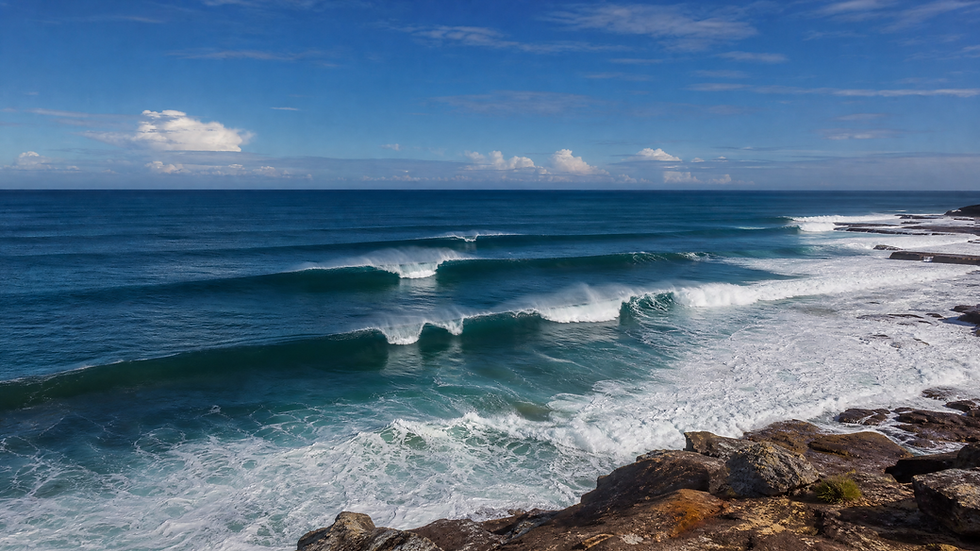
Swell is generated by distant storms and travels long distances before reaching your dive site. Even on a sunny, calm-looking day, swell can make entry and exit dangerous, stir up surge on the reef, and reduce visibility.
What to check:
Swell height — anything above 3 feet will typically affect open-water snorkelers and shallow reef divers. Experienced divers can handle more, depending on the site.
Swell period — this matters as much as height. A 6-foot swell with a 14-second period is much more powerful than a 6-foot swell at 7 seconds. Longer periods mean more energy per wave.
Swell direction — a southwest swell affects southwest-facing sites differently than a north-facing cove. Check which direction your dive site is exposed to.
Where to check: Surfline, Magic Seaweed, WindFinder, and NOAA's marine forecast all give swell data. Surfline is particularly easy to read for non-surfers.
Understand the Tide
Tides control water depth, current strength, and even visibility. At many sites, the best diving happens during a specific tidal phase — and knowing which one applies to your site is worth figuring out.
High Tide vs. Low Tide: What Changes?
High tide generally means better visibility (less disturbed sediment), more water over shallow reefs, and easier entries over rocky shorelines.
Low tide can expose hazards, create stronger currents in narrow channels, and reduce depth at popular shallow sites.
Slack tide — the brief period between incoming and outgoing tide — is often the sweet spot. Currents pause, visibility peaks, and the water settles. Many experienced divers time their dives to hit slack water.
Where to check: NOAA Tides & Currents (tidesandcurrents.noaa.gov) is the gold standard. Enter your specific location for accurate predictions.
Know How to Read a Current
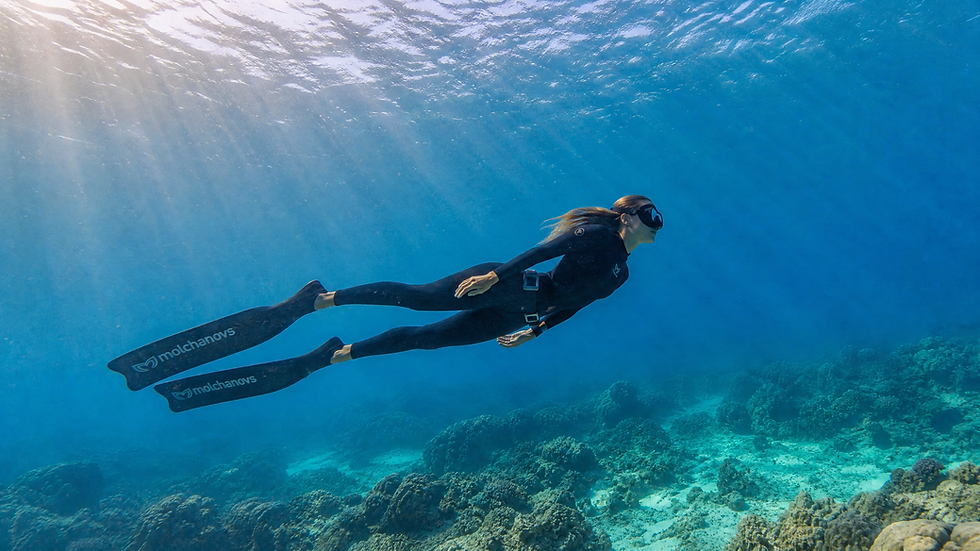
Currents can work for you or against you — and occasionally, both on the same dive. The key is knowing what you're getting into before you splash.
Signs of current at the surface:
Ripples or texture moving in one direction across otherwise calm water
Floating debris drifting in a consistent direction
Foam lines or color changes indicating water boundaries
Your mooring line or anchor line angling instead of dropping straight
Types of currents to know:
Longshore currents run parallel to shore and are common at beach entries. They can push you sideways during a snorkel.
Rip currents are narrow, fast-moving channels that pull water offshore. If you're caught in one, don't fight it — swim parallel to shore until you're out of it, then head back in.
Tidal currents flow in and out through channels and inlets. Predictable once you know the tidal schedule for your spot.
Thermocline currents — deeper divers sometimes encounter sudden directional changes at temperature boundaries. These don't usually create danger but can be disorienting.
A simple rule: always enter the water up-current from your target and let the drift bring you back. Never start a dive down-current.
Check the Wind
Wind affects surface conditions more than anything else — and surface conditions affect your safety before and after the dive, not just during it.
Offshore wind (blowing from land out to sea) flattens the surface and generally creates calm, clean conditions for divers. Snorkelers love offshore wind days.
Onshore wind (blowing from sea toward land) creates chop, makes entries and exits harder, and can push sediment around in shallow areas, reducing visibility.
Wind speed matters too. Under 10 knots, most divers and snorkelers won't notice much. Above 20 knots, surface conditions become genuinely challenging. Above 25–30 knots, most dive boats call it.
Where to check: Windy.com has a beautiful, intuitive interface for checking wind speed and direction. Worth bookmarking on your phone.
Visibility: What to Expect and Why It Changes
Underwater visibility can range from 100+ feet on a perfect day to less than 10 feet after rain, a red tide event, or significant wave action. It's worth checking before you drive to the site.
What affects visibility:
Rain and runoff — freshwater carries sediment and nutrients into the ocean, dramatically dropping visibility near inlets and river mouths
Wave action — surge from swell stirs up sand and sediment, especially in shallow areas
Plankton blooms — natural but can create green or murky water
Time of day — mid-morning to early afternoon often has the best light angle for visibility underwater
Local dive shop reports and dive-specific apps like Scubatrip and DiveAdvisor sometimes post recent visibility conditions. If you're diving a popular site, Facebook groups and local forums are also surprisingly useful for real-time condition reports.
Sun Exposure Is a Condition Too
Here's one people overlook entirely: sun intensity is an ocean condition. And it compounds over a full day on the water.
UV radiation reflects off the ocean surface, hits you from above, and bounces back up from below. Surface intervals between dives — the times you're floating, waiting, watching — are when most sun damage happens. You're exposed, often wet (which strips sunscreen), and usually not thinking about it because you're focused on the dive.
A UPF 50+ Dive Suit is the simplest solution. Plunge's full-coverage suits block 98% of UV rays, don't wash off like sunscreen, and are designed to move with you whether you're floating, snorkeling, or freediving. They're also your best defense against jellyfish contact on the surface — where you're most likely to drift into a bloom without noticing.
If you're spending serious time in the ocean, full-body UPF coverage isn't extra. It's essential.

Your Pre-Dive Conditions Checklist
Before every session, run through this quickly:
Swell: Height, period, and direction — is this site exposed to today's swell?
Tide: What's the tidal phase at entry time? Is slack tide available?
Current: What direction is it running? Where will it push me?
Wind: Speed and direction — how will this affect the surface?
Visibility: Any recent rain, algae blooms, or reports from other divers?
Sun: How long will I be out? Am I covered?
Takes five minutes. Worth every second.
What the Fish?!
The Pink See-Through Fantasia: The Ocean's Most Underrated Alien
If you designed an ocean creature from scratch and prioritized maximum weirdness, you'd probably come up with something close to the Pink See-Through Fantasia. This deep-sea sea cucumber — yes, a sea cucumber — looks like a translucent pink blob drifting through the dark, with its internal organs fully visible from the outside. It's the ocean's version of a living lava lamp.

Discovered in 2000 during a NOAA deep-sea expedition in the Celebes Sea (between the Philippines and Borneo), the Pink See-Through Fantasia (Enypniastes eximia) lives at depths of 900–5,000 meters. That's not a typo. It hangs out in near-total darkness at crushing pressure, apparently completely unbothered.
What makes it truly wild? It swims. Most sea cucumbers lumber along the ocean floor, but this one actively undulates through the water column, using its frilly "wings" (a fringe of webbed appendages around its middle) to propel itself. It can also glow — bioluminescent cells in its skin light up when threatened, potentially marking a predator and making it the target instead. Essentially, the Pink See-Through Fantasia fights back by turning its attacker into a glowing beacon.
Scientists rarely encounter it, which makes every sighting a small event. It has no hard parts, no shell, and no skeleton — just translucent tissue, quiet determination, and an absolutely iconic aesthetic.
The ocean contains multitudes.
Stay Salty
The more you know about what the ocean is doing above and below the surface, the better every dive gets. Check your conditions, respect what you find, and show up prepared. The ocean rewards the curious and the cautious in equal measure.


Comments