
The Sneaky Truth About Sun Exposure While Snorkeling (And How to Protect Your Skin)
- Plunge Waterwear
- Mar 24
- 4 min read

Picture this: you're floating face-down in the most breathtaking reef you've ever seen — parrotfish drifting past, coral waving gently below — and you surface an hour later feeling absolutely alive. Happy, salty, sun-kissed in the best way. It's only later, back at the villa with your shoulders screaming, that it hits you. You were in the water the whole time. You barely felt a thing. And yet somehow, the sun found every inch of you.
This is one of the most consistent stories we hear from snorkelers — beginners and experienced alike. Sun exposure while snorkeling is uniquely deceptive. The water cools you down. The excitement keeps you focused on the reef, not your skin. And the physics of open water work quietly against you the whole time.
Why Sun Exposure While Snorkeling Hits Differently
Most people are surprised to learn just how intense UV radiation can be on the water. When you're snorkeling face-down, your entire back, shoulders, neck, and the backs of your legs are exposed to direct overhead sun for as long as you stay in. Unlike lying on a beach — where you'd eventually roll over, retreat to the shade, or at least notice the heat building — snorkeling keeps you horizontal, engaged, and completely unaware of how long you've been out there.

Add to that the reflective power of the ocean surface — water can bounce up to 25% of UV rays back up toward you, essentially hitting you from both above and below — and you begin to understand why a single snorkel session can leave a mark that lingers for weeks. This isn't about being careless. It's physics. And once you know it, you can't unknow it.
How to Protect Your Skin on Every Snorkel Session
Good news: once you understand the risk, protecting yourself during sun exposure while snorkeling is simple. It doesn't require giving up time in the water or turning every beach day into a chore. It just requires the right habits and the right gear.
Cover Up Before You Get In
The single most effective thing you can do is wear a full-coverage UPF 50+ dive suit before you ever step off the boat. Unlike sunscreen — which needs to be applied 20 minutes before sun exposure and reapplied every two hours — a UPF-rated suit provides continuous, unwashable protection for as long as you wear it. No reapplying. No washing off. No forgetting. The areas most vulnerable during a snorkel session (back, shoulders, legs) are covered completely, so you can stay face-down in that reef as long as you want.
Use Reef-Safe Sunscreen on Exposed Areas

Even with a full-coverage suit, your face, hands, and the tops of your feet are still exposed to the sun. Apply a mineral-based, reef-safe sunscreen to these areas before you get in. Mineral sunscreens (look for zinc oxide or titanium dioxide) don't contain the chemicals — particularly oxybenzone and octinoxate — that have been shown to harm coral reefs. As someone who snorkels in the ocean, you have every reason to make this choice. Your face gets all the sun it needs without adding to the problem underwater.
Set a Timer and Take Breaks
Because you genuinely can't feel time passing in the water, give yourself a gentle anchor. Set a 45-minute timer before you get in. When it goes off, surface, take stock of how you feel, reapply sunscreen to your face and hands if needed, and decide whether to go back in. This isn't about cutting your session short — it's about building in a moment of awareness so that one magical snorkel morning doesn't turn into three days of peeling skin.
What to Look for in a Snorkeling Sun Suit
Not all sun suits are created equal, and when it comes to snorkeling specifically, fit and function matter as much as the UPF rating. Here's what genuinely makes a difference in the water.

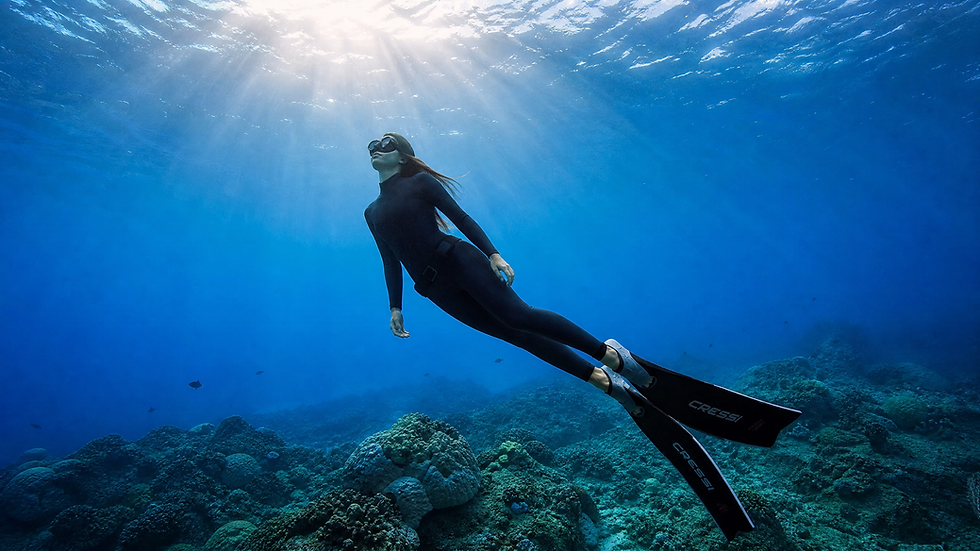
At Plunge Waterwear, our UPF 50+ dive suits are designed specifically for people who take their time in the ocean seriously. They feature full-length coverage that protects the areas most exposed during sun exposure while snorkeling — the back, shoulders, arms, and legs — without restricting your movement through the water. The thumb holes and heel straps keep sleeves and legs securely in place, so there's no pulling fabric back into position mid-dive. And the lightweight, quick-dry fabric moves like a second skin, which matters when you're floating for an hour over a coral garden.
They're also reef-safe by design. A full-coverage suit means significantly less sunscreen in the water — which is a win for the ecosystems you're there to enjoy. Available in bold, ocean-inspired prints for women and children, they make packing for a snorkel trip feel a little more like getting dressed for something worth remembering.
You Deserve to Stay in the Water Longer
The reef is not going anywhere. The fish will still be there in an hour, in an afternoon, tomorrow morning. What snorkeling teaches you, slowly, is that the ocean rewards the patient and the prepared.

It's not about squeezing more time in — it's about being able to come back, feeling good, and doing it again.
Protect your skin like it matters. Because it does.
Suit up, get out there, and give the ocean everything you've got.
Until next time — Stay Salty!


Comments