
What Every Diver Should Know About Ocean Diving Sun Protection
- Plunge Waterwear
- Mar 18
- 3 min read

You've planned the dive. You've checked the tides, charged the camera, and packed your fins. But here's something most divers underestimate until they've felt the sting of it: ocean diving sun protection is just as important as everything else in your kit.
The ocean is one of the most UV-intense environments on the planet. The surface reflects rays upward while you're submerged, the water magnifies exposure during surface intervals, and the wind keeps you cool enough that you never notice the burn coming. By the time you're rinsing your gear, the damage is already done.
If you love the ocean — and want to keep diving it for decades — read on.
Why Ocean Diving Sun Protection Is Different From Any Other Sport
Runners manage sun exposure for one to two hours. Cyclists wear jerseys. Hikers wear hats. But divers? Divers spend hours in the world's most reflective environment — sometimes starting before dawn and finishing in full midday sun — wearing a wetsuit that may or may not cover their face, neck, and hands.
The three unique sun hazards divers face are exposure during surface intervals (when you're floating in full sun with no shade), reflection off the water's surface (which can effectively double UV intensity), and the slow drip of cumulative damage across dozens of dive trips a year. None of these feel dramatic in the moment. All of them add up.

The Plunge Guide to Ocean Diving Sun Protection
There's no single magic fix — great ocean diving sun protection is a layered approach. Here's what actually works in the water.
Suit Up Before You Step on the Boat
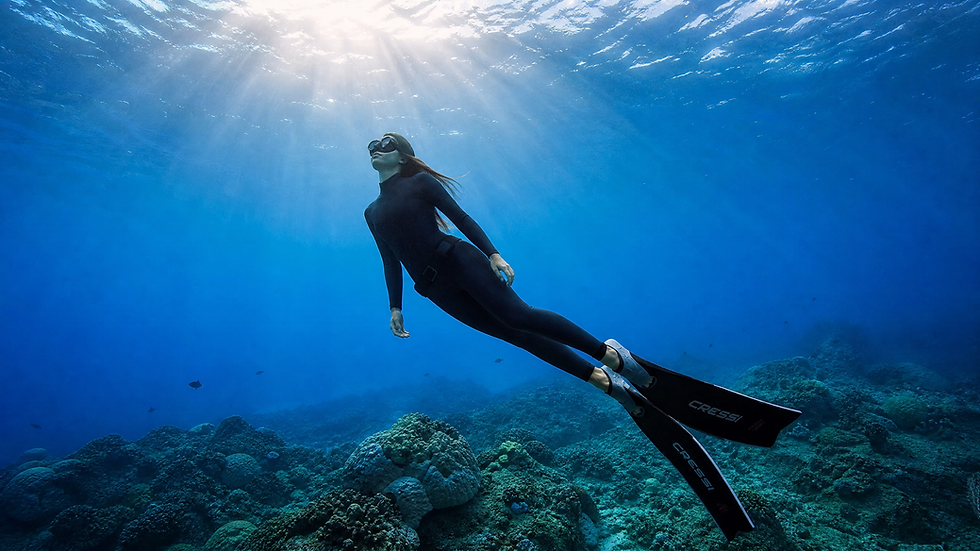
The walk from the dive shop to the boat is prime sun exposure time — and it's easy to overlook. If you're wearing a full-coverage dive skin or UPF-rated suit, you're already protected from the moment you leave shore. That protection extends through surface intervals, through the boat ride home, and through every minute you spend in and out of the water.
Rethink Sunscreen for the Reef
If you're diving near coral, your sunscreen matters more than you might think. Oxybenzone and octinoxate — two of the most common chemical UV filters — have been linked to coral bleaching and reef damage.
Reef-safe mineral sunscreens (zinc oxide or titanium dioxide) are the better choice for any areas of exposed skin. But the real game-changer is minimising how much sunscreen you need in the first place — and that's where a UPF 50+ dive suit earns its place in every serious diver's bag.
Cover Your Most Vulnerable Zones
Divers know to protect their face. But the back of the neck, the tops of the hands, and the backs of the arms are consistently the most sun-damaged areas in regular ocean divers.
These are exactly the areas left exposed between a wetsuit and a mask.
A full-length dive skin with long sleeves and thumb holes closes these gaps completely — no guesswork, no missed spots.

What Makes a Great Dive Suit for Sun Protection
Not all dive suits offer the same level of protection. When you're shopping for something built around genuine ocean diving sun protection, here's what to look for: a verified UPF 50+ rating (not just "sun-protective" marketing language), full-length coverage with long sleeves and legs, thumb holes and heel straps to prevent the suit from riding up during active diving, a fit that moves freely without creating drag or restricting arm extension, and quick-dry fabric that feels comfortable both in the water and during surface intervals.
Style matters too — and not just for aesthetics. A suit you genuinely love to wear is one you'll actually put on for every dive, every snorkel session, and every lazy afternoon on the dive boat. That's the whole point.
Built for Divers Who Love the Ocean
At Plunge Waterwear, every dive suit is rated UPF 50+ and designed around the real demands of ocean diving — the long boat days, the multiple dives, the spontaneous snorkel sessions, and the hours of sun exposure that come with loving the sea. The suits feature ocean-inspired prints, full-length coverage, and functional details like thumb holes and heel straps that keep everything in place whether you're free-diving a reef wall or floating face-down watching a turtle.
They're designed for women who are serious about the water — and who know that taking care of your skin is part of taking care of yourself.
Start Every Plunge with Ocean Diving Sun Protection Already Sorted
The best divers — the ones who are still exploring reefs and finding whale sharks at sixty — didn't get there by accident. They took care of their bodies, their equipment, and their skin.
Ocean diving sun protection is just another part of being a complete water person.
Suit up. Dive deep. Stay in the water as long as you want.
Until next time — Stay Salty!


Comments